Book Reviews (by Kim Gentes)
In the past, I would post only book reviews pertinent to worship, music in the local church, or general Christian leadership and discipleship. Recently, I've been studying many more general topics as well, such as history, economics and scientific thought, some of which end up as reviews here as well.
Entries in Book Review (90)
Golden Booklet of the True Christian Life - John Calvin (translated Henry J. Van Andel)
 Wednesday, September 28, 2011 at 1:50AM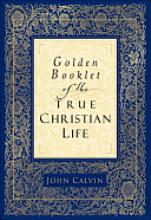
Were I to meet John Calvin today, I think he might be a surprisingly moderate but deeply spiritual Christian professor of warm wisdom and serious desire to see personal holiness take hold in the life of followers of Christ. This might seem obvious, but note what I did not say. I doubt that I would find a man who is so vehemently driven by the later (derived1) sectarian doctrine of TULIP that he would not sit in community with me as we discussed our varying understandings of theology. Where do I find such a wise and thoughtful Calvin? Where do I meet the great teacher who inscribed the systematic theology of the reformation that Martin Luther so profoundly burst forward with on the public of medieval Europe?
I meet this John Calvin in the heart of his writings of the Institute, at the sixth chapter, in book III, which was entitled by Calvin (after a number of revisions) as “On The Christian Life”. This section of his monumental treatise “Institutes of The Christian Religion” was also extracted and printed as a separate small volume called “The Golden Booklet”. In the pages of the “Golden Booklet of the True Christian Life“ (our later English title) we find the John Calvin who speaks with both fiery passion and tempered wisdom.
Calvin begins sharply enough, setting the terse tone of his writing and focused style which gets to the point almost surgically.
The goal of the new life is that God’s children exhibit melody and harmony in their conduct. What melody? The song of God’s justice. What harmony? The harmony between God’s righteousness and our obedience.2
No one can accuse Calvin of presenting an unrequited gospel. To the contrary, the Golden Book proceeds from point to point, blithely trampling on self-importance, false motives and hardness of heart to get the reader to see the reality of the gospel’s unmistakable call to the cross. He returns here repeatedly, helping us place our pride on the altar by examination of the cross :
Therefore, that we may not become haughty when we acquire wealth; that we may not become proud when we receive honors ; that we may not become insolent when we are blessed with prosperity and health, the Lord himself, as he deems fit, uses the cross to oppose, restrain, and subdue the arrogance of our flesh...This is the reason why we see different persons disciplined with different crosses. The heavenly Physician takes care of the well-being of all his patients; he gives some a milder medicine and purifies others by more shocking treatments, but he omits no one; for the whole world, without exception, is ill (Deut. 32:15).3
But John Calvin is more than just a naval gazing mystic. His profound grasp of the breadth of the Scriptural landscape helps him juxtapose his Imago Dei/creational theology (found in statements such as “The law of God contains in itself the dynamic of the new life by which his image is fully restored in us;”4 and “But Scripture here helps us out with an excellent argument when it teaches us that we must not think of man’s real value, but only of his creation in the image of God to which we owe all possible honor and love”5) with a theology of suffering, God’s will and predestination (“For adversity will always wound us with its stings. When we are afflicted with disease we shall, therefore, groan and complain and pray for recovery. When we are oppressed with poverty we shall feel lonely and sorry. When we are defamed, despised, and offended, likewise we shall feel restless. When we have to attend the funeral of our friends we shall shed tears. But we must always come back to this consolation: The Lord planned our sorrow, so let us submit to his will. Even in the throes of grief, groans, and tears, we must encourage ourselves with this reflection, so that our hearts may cheerfully bear up while the storms pass over our heads (John 21:18)”6).
Calvin’s writing here reminds us instantly of Thomas a Kempis’ “The Imitation of Christ”. Calvin’s Golden Book unearths the heart motivations, factors, deceptions and is always looking to bring the reader forward into a picture of our bleakness such that we will abandon hope of having anything useful within ourselves, save that which surrenders to Christ’s suffering discipline in our lives. Calvin whittles at our motivations of conscience and hearkens the glories of persecution. At one point, one might think he goes too far, even calling on God’s persecution so that the righteous may be more clearly vindicated:
Let the impious flourish in their riches and honors, and enjoy their so-called peace of mind. Let them boast of their splendor and luxury, and abound in every joy. Let them harass the children of light with their wickedness, let them insult them with their pride, let them rob them by their greed, let them provoke them with their utter lawlessness...For, according to Paul, it is a righteous thing with God to award punishment to them that trouble the saints, and to give rest to those who are troubled, when the Lord Jesus shall be revealed from heaven. This is our only consolation.7
While I admire Calvin’s pursuit of holiness, this declaration reads like a prayer asking for evil to come upon Christians so that they might be “accounted as sheep for the slaughter,” as he says earlier in the text. It seems doubly bad that he then says that our comfort should come on this point- the hope that others will get punished for having caused us trouble. Calvin misreads Paul, or at the least, adds his own vestige of a 16th century bloodless martyr teaching into Paul’s original text.
But Calvin is far too great a theologian and writer to leave us with a blighted aftertaste. His transcendent understandings of God’s grace and especially his mandates to a vocational calling on human beings (again rooted in his belief in the Imago Dei) lift up the highest of Calvin’s brilliance:
Finally we should note that the Lord commands every one of us in all the actions of our life to be faithful in our calling. For he knows that the human mind burns with restlessness, that it is swept easily hither and thither, and that its ambition to embrace many things at once is insatiable. Therefore, to prevent that general confusion being produced by our folly and boldness, he has appointed to everyone his particular duties in the different spheres of life. And, that no one might rashly go beyond his limits, he has called such spheres of life vocations, or callings. Every individual’s sphere of life, therefore, is a post assigned him by the Lord that he may not wander about in uncertainty all the days of his life....And everyone in his respective sphere of life will show more patience, and will overcome the difficulties, cares, miseries, and anxieties in his path, when he will be convinced that every individual has his task laid upon his shoulders by God. If we follow our divine calling, we shall receive this unique consolation that there is no work so mean and so sordid that does not look truly respectable and highly important in the sight of God (Coram Deo!) (Gen. 1:28; Col. 1:1 ff)!8
Not only is this profound wisdom but it rings of Calvin’s glorious assignment of God’s goodness into our humanity. This is very interesting, since later proponents of strong “Calvinist” doctrine would nearly eviscerate this high valuing of humanity using the hyper TULIP conflagration of the doctrine of total depravity.
Reading the Golden Book is an eye-opening and encouraging look into a more personal, pastoral Calvin, whose wisdom never leaves him, and his sense of care for the soul is always on fire.
Product Link on Amazon: Golden Booklet of the True Christian Life

Review by
Kim Gentes
[1]Calvin didn’t create the 5 point doctrine of Calvinism himself. It was assembled later (50 years beyond his death) by adherents of Calvin’s teachings at the Synod of Dort in 1619 as a mechanism to combat the divergent understandings of Jacob Arminias (from whose namesake and teachings was derived the doctrines of Arminianism)
[2]John Calvin, “Golden Booklet of the True Christian Life”, translated Henry J. Van Andel (Grand Rapids, MI:Baker Books, 1952), Pg 15
[3]Ibid., Pg 55
[4]Ibid., Pg 15
[5]Ibid., Pg 37
[6]Ibid., Pg 64
[7]Ibid., Pg 79
[8]Ibid., Pg 92-93
Luther: Letters of Spiritual Counsel (Theodore G. Tappert- translated & edited)
Thursday, September 22, 2011 at 3:13PM 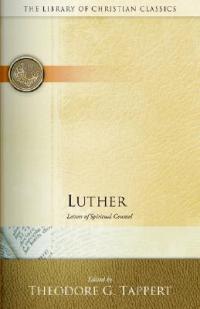
Luther: Letters of Spiritual Counsel is a collection of Martin Luther’s pastoral letters sent to a variety of people, reflecting on as wide a variety of topics as life has to offer. What one notes most poignantly about the letters is their constant pastoral voice, intense compassion for grief-stricken people, and his wisdom and wit in any situation.
The book is arranged in categorized chapters based on the main theme of the letter. A reader from the present day will be immediately affronted by the dim nature of the topics, which range from comfort, consolation, counsel and instruction for the sick, dying, bereaved, anxious, despondent, doubting, needy, troubled and more. This is not light reading. The weight of the pastoral office of the 16th century European church is pressed into the pages of these letters. This provides us not only with wise counsel for our current churches, but a harrowing picture of the people and time in which Martin Luther’s reforms were birthed.
I must admit, I approached this book initially ready for a barrage of theological treatise, each one restated in particular application for a life situation. I expected the theologian that demarcated the single biggest change in the history of the Christian church to be heady, angry and oozing with profundity. To my surprise, I came away realizing that Martin Luther was a man who cared first for the flock to which had entrusted him to care. He wasn’t applying theology to an ugly, rude world, in which his meanderings meant nothing to the real people. He was caring deeply, loving deeply, and hurting deeply with the literal scores of people around him which were broken, dying or in unfathomable pangs of grief.
Yes, he writes letters to princes and elites, administrators and bureaucrats. He tackles government, policies and the profound failures of a power rotted church structure. But at his core, he is a pastor, and these letters don’t let you stop seeing that, over and over again. All around Luther, family, students, friends, children are all dying or becoming sick of a myriad of diseases from deadly tuberculosis to the dreaded black plague. There is not just sickness and death, there is a permeating sense of fear and a gnawing hopelessness that he seems to be trying to combat with each letter.
On of Luther’s prime methods of facing such daunting pain and weakened humanity is to speak boldly of the pain, sickness and death.
When, therefor, I learned most illustrious prince, that Your Lordship has been afflicted with a grave illness...I cannot pretend that I do not hear the voice of Christ crying out to me from Your Lordship’s body and flesh saying, “Behold, I am sick.” This is so because such evils as illness and the like are not borne by us who are Christians but by Christ himself...1
Luther didn’t see ministry to people as doing something for the ill, poor or broken. He saw it as ministry to the Lord directly, and he used this as his foundation for a theology of suffering. In such a society filled with pain, Luther saw Christ’s suffering as the necessary fellowship to which we are engaged in while on earth. But Luther brought with his stark vision of pain a transcendent enraptured vision of Christ, when he said, “God is immeasurably better than all his gifts.”2 Such a picture of God is not only beautiful, but necessary, when “his gifts” seemed to come few and far between for the beleaguered parishioners Luther was guiding.
The letters of Luther are not just wise rebukes to a dismal world. His fiery spirit and even humor rise to the top occasionally, giving us a glimpse of wisdom that is embedded in reality. He says of a friend whom he was counselling against being drawn into the falseness of spiritual pride:
Whenever the devil pesters you with these thoughts, at once seek out the company of men, drink more, joke and jest, or engage in some other form of merriment. Sometimes it is necessary to drink a little more, play, jest, and even commit some sin in defiance and contempt of the devil in order not to give him an opportunity to make us scrupulous about trifles. We shall be overcome if we worry too much about falling into some sin.3
As you can see, Martin Luther had an unquenchable belief in the power of the community. This so guided him, it is doubtless that one of the driving currents of his reformation doctrine.
The papists and Anabaptists teach that if you wish to know Christ, you must seek solitude, avoid association with men...This is manifestly diabolical advice...[rather] God wishes that His name be proclaimed and praised before men and spoken of among men rather than that one should flee into a corner... [and] teaches us to do good to our neighbors, and hence we must not be segregated from them. This advice [papists and Anabaptists] is also destructive to the family, economic life, and the state, and it is at odds with the life of Christ, who did not like to be alone and whose career was one of constant turmoil because people were always crowding around him. He was never alone, except when he prayed. Have nothing to do, therefor, with those who say, “Seek solitude and your heart will become pure.”4
Martin Luther had such a strong value of community and companionship that he prescribed it for almost every condition of the body and soul. He was constantly reminding husbands and wives to encourage one another, for people to not be alone when struggling with temptation, depression or illness. Above, he even recognizes that not only is it a teaching against Christ and his body to avoid the community, but it actually destroys families, harms economic viability of individuals and communities and even threatens the state stability. What a brilliant understanding of the power of community.
Product Link on Amazon: Luther: Letters of Spiritual Counsel
Review by
Kim Gentes
[1]Martin Luther, “Luther: Letters of Spiritual Counsel”, translated Theodore G. Tappert (Louisville, KY:Westminster John Knox Press, 1955), Pg 22
[2]Ibid., Pg 54
[3]Ibid., Pg 86
[4]Ibid., Pg 120
christian, counsel, encouragement, grief, letters, luther, martin luther, pastoral, reformation, reformer, spiritual, writings in Book Review, Counsel, Grief, Loss, Theology Ultimate Worship Resource Guide - Kim Gentes (2011)
Wednesday, August 31, 2011 at 9:14AM 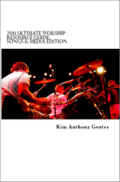 REVIEW: “I was shocked! When Kim Gentes asked if I’d take a look at his new book, I agreed, although not enthusiastically. 2011 Ultimate Worship Resources Guide: Songs and Media Edition, really didn’t sound like something that was going to be exciting, compelling reading. I was wrong.
Beginning with a brief history of modern worship music, and then offering practical sources to find songs and song-related media, this book really lives up to its title.
I know a lot about worship music. As one who teaches on worship for a living, I try to keep up on what’s going on in worship music. But I’ll be honest, there are great sources in this book that had somehow totally eluded my attention. After all, who has time to research everything out there?Well, apparently Kim Gentes does and he put it all together in this book.
The day I finished reading the book I told the worship leader at our church that he needed to get a copy. I don’t recommend things to him very often. This one, though, is definitely worth it. You probably ought to get one, too… Don’t miss out. This book will save you tons of time and effort!“
Tom Kraeuter, Training Resources, Hillsboro MO
The book is now available in BOTH regular paperback and eBook (Kindle formats), links below.
| Buy Kindle Book | Buy @ Amazon | Buy from Kim | ||||
|
FREE: a full chapter sample from the book is available for download here.
No Future Without Forgiveness - Desmond Tutu (1999)
Tuesday, August 23, 2011 at 4:06PM 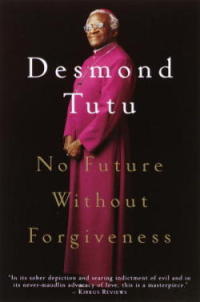
"Forgiving means abandoning your right to pay back the perpetrator in his own coin, but it is a loss that liberates the victim."1
This lithe statement makes clear what equation is required for solving the problem of reconciliation. It was this solution that was the heart and soul of the transformation that took place in South Africa in the last 20 years. As a prominent member of the ecclesiastical and moral movements within the South African nation, Desmond Tutu became an icon of leadership for the black people who had suffered for decades under the crushing blows of apartheid. Tutu's book "No Future Without Forgiveness" is a personal memoir of his process and involvement with the, now famous, Truth and Reconciliation Commission (TRC) which he chaired during its lifetime.
The commission's broad mission, mandated by the South African President Nelson Mandela, was two-fold. First, it was to engage a process which would discover the truth of the apartheid operation in South Africa, expose it, allow for confession of its terrible acts by the people responsible (under the auspices of a later process to amnesty), and look for verbal contrition related to those confessions. Secondly, it was to engage victims as well, and call for their testimony and courage to reveal the stories of their abuse and suffering. A later process of both amnesty and reparations was to follow the revelations brought out by the TRC's findings.
What is most surprising about the commission is not, however, the stories of horror brought forth by the victims, or even the admissions of guilt submitted by many of the perpetrators. What is most surprising is the consistent, real, verbal, physical, on-the-spot, heart-rending examples of forgiveness. In profound case after case, magnaminity flowed like the waters of healing through so much of the proceedings of the commission that the TRC, South Africa and Tutu himself became examples of the power of forgiveness for the entire world. Though the stated title of the commission included reconciliation, there was no true step in the process of its actions that guaranteed or even offered such a wild promise. Yet it encountered it time and again.
Tutu is quick to point out the failings, weaknesses, hurdles and sufferings of their efforts, as well as their successes and is all the bigger a human being for doing so. "No Future Without Forgiveness" is a definitive example of the gospel of Jesus becoming the good news for the 20th (and 21st) century human race. Without casting any religious encumbances on either the procedings or his book readers, Tutu guides both through a process of healing the begins with confession, leads to admission, responds with forgiveness and goes forth with reconnection and the beginnings of possible relationship.
While topic and content are ultimately the pinnacle of concerns for the human race, as a writer, Tutu runs slightly aground on a few points, but never endangers the work with irreprable harm. First, the book has several sections that repeat examples and recite cases. This would not seem odd, as the importance of the work demands repetition, but this happens so often and with such detail one believes a broader editorial presence might have scaled back some of the recitings as thinner references, with restating much detail. Second, there are several times when grammatical sense and structure were not attended to. Slight deference is given for the uniqueness of South African english which may fall askew from American english (or vise versa), but I found a few examples of clauses without whole sentences, which seemed odd. Both of these relatively minor authorship roadbumps seem like they could have been avoided by good editorial management.
That said, the book is engaging, unique and profoundly needed. So far beyond being a great book with no practical application, "No Future Without Forgiveness" is a success not because it is a literary juggernaut, but because it is an archive of amazing action that literally changed a nation. Saying more about the content is not necessary, as the story is a compelling and inviting read for anyone who wishes to take it up.
An unstoppable book with an unstoppable message.
Product Link on Amazon: No Future Without Forgiveness
Review by
Kim Gentes
[1]Desmond Tutu, "No Future Without Forgiveness", (New York, NY: Random House 1999), Pg 272
How The Irish Saved Civilization - Thomas Cahill (1995)
Saturday, April 2, 2011 at 7:29PM  Studying is different than experiencing. One normally studies to gain knowledge, while experience leads to something slightly different- understanding. Understanding is the signature of Thomas Cahill's now iconic book "How The Irish Saved Civilization". One enters into it hoping to learn something, but one leaves it with understanding. This happens because Cahill becomes not only a wordsmithing instructor in our class on the ancient world, but an articulate story-teller of the larger narrative of western civilization.
Beginning with the 5th century (and weaving back and forth through time as necessary), Cahill explores the foundations of the fall of the Roman Empire, including the sentiment and arrogance of a Roman leadership, fat from centuries of literal world-wide conquest. From there, we learn the common practice of slavery (through banditry and outright capture) that was rife through Europe. This quickly leads to an introduction to the Irish and their war parties that scourged the coast of Britain, capturing thousands of slaves for its tribal societies back on Ireland. Briefly, we hear of one such slave that was brought from "civilized" Roman camped Briton to the wiles of Irish clans- the young Patricius. Of course, he will become a central player in this story, but not yet.
The book then detours back to continental Europe and delves extensively into the foundations of Christian apologetic thinker and literary giant Augustine of Hippo. After a few foundational discussions on his Greek influence via Plato and Socrates, we are taken on a brief survey of the Greek classical writers Homer, Virgil and Cicero. Cahill does all this seeming meandering to establish one thing- a lens (via Augustine) through which he can paint his picture of the ancient world. Once he thinks you have gotten this, the book moves on to explain the destruction of the Roman empire. He explains how wave after wave of barbarian tribes ransacked Rome (and its power centers) not only of its gold, grain and able-bodied workers, but washed its culture, science and literacy into oblivion. Cahill puts it poignantly:
As Roman culture died out and was replaced by vibrant new barbarian growths, people forgot many things—how to read, how to think, how to build magnificently...[1]
But he quickly points out that amidst this destructive scene, one thing did stand- the church:
There was, moreover, one office that survived intact from the classical to the medieval polis: the office of Catholic bishop.[2]
Cahill's Europe is taking shape, and we see that while governments were failing, the religious institution of the Catholic church was maintaining a sense of sovereignty, and almost untouchable preeminence. At this point, the book turns back to Ireland and we get a full chapter of history on the Celts- ranging back to 300-500 BC and brought forward through recitation of their literature (mostly extensive quotes from the Tain) and some wide assortment of lore and nuance to the uniquely Irish persona.
By the time we are caught up on the Irish story, we are reintroduced to Patricius, who by now has been explained as the slave who eventually escaped his Irish captors. In a tremendous revelation from God, he re-envisions his life as a missionary to the homeland of his former captives. He returns to Ireland and almost single-handedly converts the entire country (made up of several tribal "kingdoms") to Christianity. The most profound implication of this, for Cahill, becomes the marked change of the Irish (and its Patrician monks in particular) from lives of barbarism to cultured thinkers, readers, and most of all, scribes.
Cahill is clear that Christianity received the Irish (who never gave up their unique historical, cultural and psychological imprint) through the vehicle of Patrick, and in doing so retained its unique identity as Irish. But it became, at just the right time, the center for collection, reclamation and copy of nearly all western classical literature, whether it be religious, cultural or scientific. The Irish monasteries became the information databases of western civilization, at a time when the Roman world was being decimated by the constant infusion of military campaigns from the previously pummelled peoples of neighboring states. Patrick gave Christianity and classical literacy to the Irish, and Irish in turn, kept it for safe-keeping until the destruction of the Roman world was complete. Once it was, according to Cahill, the Irish monasteries and its monks flooded the British, Gaulish and continental coasts of Europe to bring that literature back to the western world.
Cahill's work is undeniably impressive. Both as historical comprehension (which the rest of us can appreciate and understand without the lifetime of historical research it would require), and as narrative art, "How The Irish Save Civilization" is a monumentally riveting book. It is story, history, and yarn, all wrapped well into a brilliant thesis.
For certain, Cahill pontificates on his personal soapbox throughout, and as he wraps up, his book. A fair warning is also given to Cahill's seeming supposition that he must use the F-word at least once in each of his books, which he complies with (though in high style, if you can imagine) here. Like, his book "Mysteries of the Middle Ages", Cahill has a couple of axes to grind and he isn't shy about brandishing his blade when the right sharpening stone comes along. However, this should not deter any reader from reading his exceptional insights. He takes the time to point out injustice, conflict and modern problems that could well learn from the lessons of antiquity pointed out by his book. These brief, though regular, interjections in the story are easy to spot and easy to agree with (or not, should the reader dissent).
The trail that the book weaves through history and your mind feels a bit mythical, while at the same time far more human than I have ever heard from any stories of antiquity I've read elsewhere. It's a gorgeous balance. One doesn't leave this book without feeling the impact of Cahill's intention to both teach history and hope the present to be changed by it.
A marvelous book.
Product Link on Amazon: How the Irish Saved Civilization
Review by
Kim Gentes
[1]Thomas Cahill, "How The Irish Saved Civilization", (New York, NY: Anchor Books 1995), Pg 60
[2]Ibid., Pg 60
Patrick, cahill, christianity, civilization, culture, history, irish, literature, thomas cahill in Book Review, Church, Community, Geopolitical, History, Leadership, Literature, Persecution