Thomas à Kempis,
christian,
classic,
history,
imitation of christ,
leader,
meditation,
mystics,
pastoral,
thomas a kempis in
Book Review In the past, I would post only book reviews pertinent to worship, music in the local church, or general Christian leadership and discipleship. Recently, I've been studying many more general topics as well, such as history, economics and scientific thought, some of which end up as reviews here as well.
Tuesday, February 1, 2011 at 2:35PM
The Imitation of Christ is the writing of Thomas Haemerken who was born near Kempen. He later became known for the locale of his origin and thus Thomas à Kempis is our common rendering of his name and authorship. The Imitation of Christ is a volume which collects four main books dealing with primarily personal development, purity and piety of the reader, leading them to ultimate union with Christ.
The first two books in the collection are direct admonishments from Thomas directing the reading is proverb-like directives, pitting the failure of human effort against the solace of God’s grace. The last two books are scripted dialog between Christ and the disciple (implying the writer and also the reader). The writer chooses to take a blunt instructive tone in the entire treatise, not commending or encouraging the reader, but handling the vast majority of the topics through warnings. Of particular import to Thomas was to communicate how no human should find consolation in this life, but only in Christ. Repeatedly, he creates the conversation to repudiate the sinful desires of the reader. The only consolation from struggles, temptations, persecution or failures is temporary consolation of God’s approval and sustenance through God’s grace, and death which leads to union with Christ after purgatory.
Thomas has seems of brilliance that flow into praise of God, but he is darkly adamant against letting any such joy spill out in actual physical, emotional or social contexts. Here is a brilliant quote from him in regards to praise of God:
Would that our sole occupation were the perpetual praise of the Lord our God with heart and voice! Had you no need of food, drink or rest, you could praise God without ceasing, and give yourself wholly to spiritual things.[1]
For Thomas privacy of all things is a matter of utmost piety. The book provides brilliant glimpses into sinful and human motivations and how to conquer such devices through keeping vigilant in confession, penance and communion. Thomas fails to learn the lesson of St. Francis however, and reverts to the pre-Franciscan millennial in which solitude from people was a necessary act of lifelong piety. Rather than acquiring the self-abasement of the monastics and combining the communal commitment of Francis, Thomas à Kempis undoes the brilliance of Francis advancement and calls all devout Religious to return to solitude and cares none for the clearly Biblical mandate of brotherly love and the community of the Church.
The book, like the other Christian mystic writings of the 10th-14th centuries, summates with its goal of union with Christ. This is particularly interesting in “The Imitation” in that Thomas focuses exclusively on the Eucharistic sacrament as the ultimate manifestation of God’s help for the Christian. This is woven beautifully into a prayerful call for Christ to join the believer in the communion sacrament, where Thomas says :
Dear Lord, I long to receive You with deepest devotion and ardent love. and with all the affection and favour of my heart, as many Saints and holy persons have longed to receive You in Communion, who were especially pleasing to You by the holiness of their lives, and were on fire with devotion. O my God, Eternal Love, my supreme good and eternal delight, I wish to receive You with the most eager devotion and deepest reverence that any of Your Saints have ever felt. or could feel.[2]
Product Link: The Imitation of Christ (Penguin Classics)
Review by Kim Gentes
[1]Thomas à Kempis, “The Imitation of Christ”, (London, England:Penguin Books 1952), Pg 65
[2]Ibid., Pg 214
Thomas à Kempis,
christian,
classic,
history,
imitation of christ,
leader,
meditation,
mystics,
pastoral,
thomas a kempis in
Book Review
Tuesday, February 1, 2011 at 2:15PM
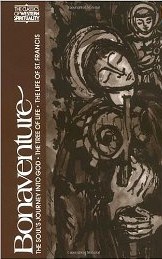
Bonaventure is a collection of the namesake saint’s most prized writings. It includes his two well read treatise The Soul’s Journey into God and The Tree of Life, as well as the officially commissioned (by the Church) biography of Saint Francis of Assisi called The Life of St. Francis.
His most well known work, The Soul’s Journey into God, is a fusion of mystical interpretation of biblical allegory and “Augustine”-like logical thought. Typical of these writings, the entire text is constant dissection from major point to minor point, back to major point- always trying to draw an outline of grand understanding rather than tell a coherent story. The treatise starts with the physical/natural aspects of human existence, the natural weakness and frailty of man with its goal is lead you through a progression that will consummate in ultimate union with God. Bonaventure sees this as a progressive work that involves “levels” or stages of reflection and contemplation. You move from infant to maturity, eventually reaching ecstasy with God.
The Tree of Life follows a more clear storyline- in that it chronologically restates the life of Christ- but it is merely using that story arc to articulate the contemplative interpretation of Christ’s life as allegory. With the cross of Christ being a tree of life, the stages of Christ’s life are explored as various fruits from his character, which hang on three main branches of the perfect life- His original (life before the Cross), His passion (the trials and crucifixion), and His glorification. Bonaventure uses less logical arguments than The Soul’s Journey into God, but he ultimately relies on much more recognizable components of Christ’s life to pin his thesis to, even if it is (The Soul’s Journey into God) largely based on allegory, as well.
My favorite work in this book, however, is the Life Of Saint Francis, which uses Bonaventure's skill as a communicator to convey the biography of the venerable saint Francis. Some points of the book are so gushing with praise of Francis, the writing loses credibility, though not elegance. But the longer you read, the more you become enraptured with Bonaventure into the life of Francis. By the end of Francis biography, you are fully immersed in the teachings and practice of Francis, and thus, you believe the miracles, the stories, and the accounts of his wisdom and greatness. Even in Francis death, he comes to prove Bonaventure’s writings we saw in both The Soul’s Journey into God and The Tree of Life by describing a man who enters into complete union with God, both by his ardent contemplation and fervent practice (especially of poverty). This union becomes not only an example, but almost another Christological event, as Francis “becomes” Christ as the first one to record receiving the sign of the stigmata.
A powerful quote that inspired me in The Tree of Life is:
O hard heart,
insane and impious,
to be pitied as if bereft of true life,
why do you rejoice and laugh
like a madman
in the midst of such misery
while the Wisdom of the Father
weeps over you?
Consider your weeping physician and
make mourning as for an only son,
a bitter lamentation;
let tears stream down
like a torrent
day and night.
Give yourself no rest,
nor let the pupil of your eye be still.[1]
This particular point was a profound revelation to me. It was the best articulation I found for the difference between Francis and the early ascetics:
When they arrived at the valley of Spoleto full of their holy plans, they began to discuss whether they should live among the people or go off into places of solitude. But Christ's servant Francis did not place his trust in his own efforts or those of his companions; rather he sought to discern God's will in this matter by earnest prayer. Then, enlightened by a revelation from heaven, he realized that he was sent by the Lord to .. win for Christ the souls which the devil was trying to snatch away. Therefore he chose to live for all men rather than for himself alone, drawn by the example of the one who deigned to die for all (2 Cor. 5 :15).[2]
In this last sentence we see the absolute brilliance of Francis, and the astuteness of Bonaventure for articulating it. His work of poverty, asceticism and self-discipline was not the isolated ascension to God that the desert Fathers espoused through their monastic model. Instead his asceticism was placed inside the community (instead of away from it) because he said “he chose to live for all men rather than for himself alone”. In my estimation, this is the most brilliant accomplishment of St. Francis, and revealed by Bonaventure.
Product Link : Bonaventure: The Soul's Journey into God, the Tree of Life, the Life of St. Francis (The Classics of Western Spirituality)
Review by Kim Gentes
[1]St. Bonaventure, “Bonaventure: The Soul’s Journey into God; The Tree of Life; The Life of St. Francis”, (Mahwah, NJ:Paulist Press, 1978), Pg 137
[2]Ibid., Pg 208
Tuesday, February 1, 2011 at 1:47PM
Francis and Clare: the Complete Works contains the library of writings from Saint Francis of Assisi and his female protege Saint Clare of Assisi. Francis writings range from his mystical understandings of Christ’s humanity and God’s nature (and their poetic renderings) to his practical Rules, and Testament, which details how life is to be lived by those who followed his way of life in the Order. Clare’s writing, is more terse and compact, and you can see it has synthesized the teachings of Francis to an even more focused agenda than himself. Clare seems to be a more skilled writer, or at least more poignant.
Both Francis and Clare articulate the need to require others, through their writings, to ascend to Christ through and imitation of his life of poverty and suffering. Francis, even in his poetic writing, seems to have a fascination with praise and singing, even in his death. Clare seems to requite the same kinds of things as less than noble for the serious mind set on Christ. He seems raw and lost in his bodily and spiritual union with God, through his physical suffering coupled with his demanding attention to detail that was still always tempered with a joyous tone towards God’s goodness. Clare’s words are more requesting and with an air of entreatment that seems appropriate for nobility. This might perhaps have been because much of her writing was, in fact, directed to nobility in her letters to Agnes of Prague.
This quote from Francis absolutely inspires me:
1. You are holy, Lord, the only God, You do Wonders.
2. You are strong, You are great, You are the most high, You are the almighty King. You, Holy Father, the King of heaven and earth.
3. You are Three and One, Lord God of gods;
You are good, all good, the highest good,
Lord, God, living and true.
4. You are love, charity.
You are wisdom; You are humility; You are patience;
You are beauty; You are meekness; You are security;
You are inner peace; You are joy; You are our hope and joy; You are justice; You are moderation, You are all our riches.
[You are enough for us].
5. You are beauty, You are meekness; You are the protector,
You are our guardian and defender;
You are strength; You are refreshment.
6. You are our hope, You are our faith, You are our charity,
You are all our sweetness,
You are our eternal life:
Great and wonderful, Lord.
God almighty, Merciful Savior[1]
Clare, likewise, is just as enthralling where she says:
2. Place your mind before the mirror of eternity!
Place your soul in the brilliance of glory.3f
Place your heart in the figure of the divine substance!4
And transform your whole being into the image of the Godhead Itself
through contemplation!5
So that you too may feel what His friends feel
as they taste the hidden sweetness
which God Himself has reserved
from the beginning
for those who love Him..[2]
Saint Francis and Clare are a unique expression of early Middle Ages monastic. In a sense Francis carved out the physical nature of becoming like Christ in body, and Clare confirmed his vision in both practice and across genders. Together they became a template for much of what would follow in mystic thought and practice in the Church for hundreds of years.
Product Link: Francis and Clare: The Complete Works (The Classics of Western Spirituality)
Review by Kim Gentes
[1]Francis of Assisi & Clare of Assisi, “ Francis and Clare: The Complete Works”, (Mahwah, NJ:Paulist Press, 1982), Pg 100
[2]Ibid., Pg 200
assisi,
christian,
clare,
francis,
francis of assisi,
history,
religious,
saint,
saint francis,
st francis,
theology in
Book Review
Tuesday, February 1, 2011 at 1:25PM
Bernard of Clairvaux was the abbot of Clairvaux monastery (which he built and named) which is located in what is now Northeastern France. Bernard’s writings, sermons and letters proved to be pivotal in the twelfth century. His particular devotional penchant for expounding the love of God invigorated monastic communities in his time, and provided a template for others to come, who would look back on this great Christian mystic. Bernard, like other great minds in the history of the church, was intent on dissecting the components of the human soul. In his work you can see broad areas of focus, such as: understanding our own humanity, explaining our penchant for sin, an exceptional treatise of love, and finally expressing a practical model for personal development when dealing with the aforementioned. Like Gregory before him, much of his writing about our conscience, and internal conflicts led to a fairly comprehensive articulation of the soul and human psychological state.
Bernard focuses an extended amount of time and ink to the book of Song of Songs, where he expounds nearly all of his theories on the relationship of Christ (the Bridegroom) with the Church (his bride). He is especially enamored with the concept and passage declaring “Let him kiss me with the kiss of his mouth”. He says:
But he, he of whom they speak, let him speak to me. Let him kiss me with the kiss of his mouth. Let him not speak to me in them or through them, for they are "a watery darkness, a dense cloud" (Ps 17: 12). But let him kiss me with the kiss of his mouth, whose gracious presence and eloquence of wonderful teaching causes a "spring of living . Water" to well up in me to eternal life an 4: 14). Shall I not find that a richer grace is poured out upon me from him whom the Father has anointed with the oil of gladness more than all his companions, if he will deign to kiss me with the kiss of his mouth (Ps 44:8)? His living . and effective word (Heb 4: 12) is a kiss; not a meeting of lips, which can sometimes be deceptive about the state of the heart, but a full infusion of joys, a revelation of secrets, a wonderful and inseparable mingling ) of the light from above and the mind on which it is shed, which, when it is joined with God, is one spirit with him (l Cor 6: I 7)..[1]
Perhaps Bernard’s most well-known work is a summarized teaching called the Four Levels of Love. It explained his deep understanding of our souls and their progress to full union with God. One of my favorite things about Bernard, however, was his perception of how sin is always looking for a way to corrupt love. He argues for clarity at every level of the person. He says:
I am suspicious of love which seems to be prompted by hope of gain. It is weak if when hope is gone it either vanishes or diminishes. It is impure when it desires something else, other than the beloved. Pure love does not hope for gain. Pure love does not draw its strength from hope; nor is it weakened by mistrust.[2]
Bernard is not without his issues, however. Though love was that the center of his message, he will forever be remembered for being the outspoken voice to rally support for a crusade, the second Holy War, in the mid 1100’s. He will be later credited, as well, with being one the strong initiators of the veneration of Mary.
Product Link: Bernard of Clairvaux: Selected Works (The Classics of Western Spirituality)
Review by Kim Gentes
[1]Gillian R. Evans, “Bernard of Clairvaux: Selected Works” in The Classics of Western Spirituality: A Libarary of the Great Spiritual Masters, translated Gillian r. Evans (Mahwah, NJ: Paulist Press, 1987), Pg 216
[2]Ibid., Pg 273
bernard,
bernard of clairvaux,
christian,
clairvaux,
four degrees of love,
history,
mystics,
saint,
saint bernard,
theology in
Book Review
Tuesday, February 1, 2011 at 12:50PM
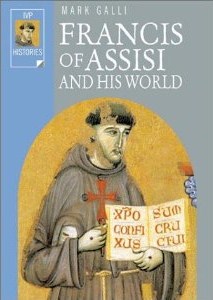
Francis of Assisi and His World is a historical biographical book on St. Francis, the founding father of the Franciscan order in the Catholic church. The book covers Francis’ entire lifespan and touches on the continuation of the Order after his death. His life reminds us of Antony, Augustine, Gregory the Great, St. Benedict of Nursia and other heroes of the faith- all having the common strand of being rich in worldly position and goods, but abandoning hope in those to serve and follow God with great passion and impact. To sum up his life would be difficult, but I found five themes in Francis life that are especially resonant in this biography: moments of revelation, moments of contrition, self-disciple, submission to authority and intense personal joy.
What moves me powerfully about Francis is his passion for following the Lord’s direction without hesitation or concern for “balance”. Like Francis, I believe many people (including myself) want to respond without hesitation to God’s voice. But unlike Francis we often convince ourselves (or allow others to convince us) that we must concern ourselves with our future. What Francis did in his life, was completely abandon the thought of taking his life in his own hands. This inspires me. Here was one example in Francis life:
In the midst of his preparations, Francis had a dream. He found himself in his father’s house, which had been transformed into a palace filled with arms. Instead of bales of cloths, he saw saddles, shields and lances. In one room, a beautiful bride waited for her bridegroom. Francis heard a voice saying that all this was for Francis and his knights. When Francis woke, he was ecstatic...[1]
Another thing that impacted me about the biography was Francis’ discipline. Francis ability to master asceticism was not derived from a supernatural gift of sustenance. He had to work at bringing his actions into subjugation of his will. Many of the things Francis did, seemed to come as much from a clear understanding of personal work ethic as it did from a “gift”. And this was a primary thread throughout his Rule, which stipulated such strong adherence that its following could only produce like people. He says:
A little while later, Francis was riding his horse near Assisi (apparently this took place before the rift with his father) when he saw ahead of him a leper standing in the road. He determined immediately to do something sweeping, something dramatic to change his attitude. He dismounted, walked up to the man and personally gave him a coin. But this still was not enough to a man of Francis resolve. So he bent over, drew his lips near the mans decaying hand and kissed it. The man replied by giving Francis a kiss of peace; Francis did not recoil. Then Francis remounted his horse and went on his way.[2]
While it is hard to dislike Francis and his relentless pursuit of God, Francis deep devotion to poverty may have been inordinately self-effacing. Some of his practices and beliefs not only likely led to his early suffering and death, but also brought unnecessary burden on those who followed him with fervor.
Product Link: Francis of Assisi and His World
Review by Kim Gentes
[1]Mark Galli, “Franics and His World”, (Downers Grove, IL: InterVarsity Press, 2002), Pg 25
[2]Ibid., Pg 49
assisi,
christian,
francis,
francis of assisi,
history,
leadership,
mark galli,
ministry,
saint francis,
saints,
st francis,
tradition in
Book Review