Book Reviews (by Kim Gentes)
In the past, I would post only book reviews pertinent to worship, music in the local church, or general Christian leadership and discipleship. Recently, I've been studying many more general topics as well, such as history, economics and scientific thought, some of which end up as reviews here as well.
Entries in Book Review (90)
Musician's Guide to Reading & Writing Music - Dave Stewart (1999)
 Wednesday, June 5, 2013 at 9:57AM
 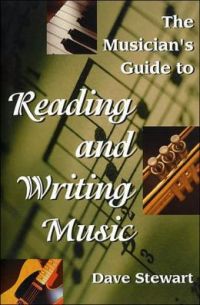 Easily the best music theory book I've found for those who know very little theory. Intensely formally trained musicians will balk at this book, but "garage band" musicians will love it. The book covers four main areas: Notation, Rhythm, Chords (4 sections), and Writing Music. The breakdown of the various topics into clean sections makes it easy to use the book as a reference for later. I often grab it when I need to refer back to some point on chords (for which it has extensive information). In addition to a good structured outline to the book, it starts off easily and takes nothing for granted- you learn as quick as you can pick up, because he starts off assuming you need to learn everything from timing to notes and more. If you are a beginner, its all there, if you somewhat knowledgeable you can move along quicker.
This is a compressed music theory book that is easy to pick up and learn from. It is tremendously helpful for musicians with gift and abilities, but little formal musical training. It gives the basics in excellent format (simple and straight forward) and style (humorous). The pithy style of this book makes it like reading a music book written by David Letterman.
I recommend this book to two crowds: first, if you are a rock musician that has played for years and just never got around to having a good grasp of theory, this book is made for you. Second, if you are a worship leader or musician in a local church but likewise finds yourself with a less than clear understanding of the all the salient musical theory points, then you will likely be helped a lot by reading this book as well.
When I first read this book (back in 1999) I bought a printed paperback copy (literally just 100 pages long). When I lost the book about 10 years later, I bought another copy, simply because it is such a helpful reference. The book is now available on Kindle/eBook format too.
Amazon Link: http://amzn.to/12sLxBe
Review by Kim Gentes
How To Lead Worship Without Being A Rock Star - Dan Wilt (2013)
Tuesday, May 21, 2013 at 9:06PM 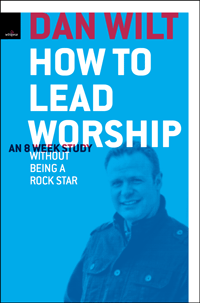 I've spent the last 15 years evaluating and recommending resources for worship ministries, churches, leaders, musicians, vocalists, audio/video techs and pastors. I've even written a book highlighting the best of those resources that I've found relevant to worship and music. But in that time and search, I've yet to recommend a resource that completely covers the topic of how to lead worship. There are several books and DVDs and resources that drill down on specific details, skills, issues or ideas- all of them good and needed. But what I was looking for was the one book that could serve as the manual or textbook for those with a calling to leading worship. My search has ended.
In "How To Lead Worship Without Being a Rock Star", Dan Wilt has crafted a values-based approach to the calling, development and practice of worship leading. As the title indicates, Wilt is as concerned with answering the question of why to lead worship as he is to how. Right from the start, the author identifies the 800lb gorilla in church music: the fact that leadership of sacred worship has collided with the "American Idol" pop-culture on the Sunday morning music platforms of churches around the world. Wilt's pithy phrase brings these tensions into crystal clear focus in his introduction:
Excitement and danger - that is the privilege of worship leading.1
From that place, the book takes the reader on an eight chapter course that will engage all the necessary components of development to bring a person through detailed information, study, evaluation and questioning- all as a means to growth into worship leadership. The first chapter drills deep into the subject of why we worship and why leading is a part of local church expression of worship. This flows nicely into the second chapter which continues to carve out the foundations by addressing the core values that we must have undergirding our understanding and practice of worship leading. The final foundation stone of his book comes in chapter three, which is titled "The Character of the Worship Leader", in which the reader is made to face the hard questions of motivation, calling and desires in their hopes of participation in leading worship. These first three chapters are worth the cost of the book on their own, and as someone who has worked for years at developing other worship leaders the importance and value of these foundations can't be overlooked.
Chapters four and five kick into practical guidance on the skills, planning, practices and thinking behind great worship leading. Chapter four focuses on the functions, techniques and skills of the worship leader and chapter five drills down on the leadership of a worship band. Chapter six deals with the pastoral relationship and the role of mentorship as you help others in growing in worship leading. Chapter seven culminates this practical guidebook approach by articulating excellent points to helping you in "Becoming a Great Worship Leader". The final chapter revisits the main points of the book and returns the reader to foundational concepts of values that undergird this book.
Dan Wilt's book is as virtual "course in a book" on worship leading 101. If you are looking for a rock solid manual to help with teaching the foundational values of worship leading along with the essentials of practical worship ministry, you have struck gold with "How To Lead Worship..." by Dan Wilt. I would especially recommend this to those of you who may be training, mentoring or leading other worship leaders (whether Sunday morning or small groups)-- this is the one manual that can help you and those that you are mentoring! Because the book is laid out in eight distinct sessions (including salient points, chapter discussion questions and summaries), you can use it as you "ready-to-use" study that both you and your trainee will learn from. Wilt has used his years as a local church worship leader, pastor, college professor and mentor to worship leaders around the world to inform his very practical approach to creating and developing this manual- and it shines through.
There are certainly more things to learn and technical concepts to be drilled down on as a worship leader develops, but this book should be at the starting point as a foundational course text for churches, worship departments, and Christian colleges everywhere. It is practical, readable, honest, values-centered and encouraging! Get a copy of this physical printed book in your hands now! While it will be life-changing for the beginner, it can also serve as a great structural inspection for the values and operational architecture of those already operating in the call of worship leading.
Book Link: http://bit.ly/1a3U5w9
Review by Kim Gentes
1. Wilt, Dan (203). How To Lead Worship Without Being a Rock Star: an 8 week study. (Page 4). Wild Pear Creative.
book, book review, dan wilt, leadership, music, textbook, values, vineyard, worship, worship leader, worship leading in Book Review, Leadership, Ministry, Resource, Worship Automate This: How Algorithms Came To Rule Our World - Christopher Steiner (2012)
Wednesday, May 8, 2013 at 12:55PM  Have you ever wondered how we got to the point of automaton being a part of every aspect of our interactions with the commercial world? Wonder no longer. In his recent book "Automate This" Christopher Steiner explores the history of selected technology wizards and innovators who developed ways to use hardware and software algorithms to automate and predict human actions. It is in that realm that Steiner explores the massive influx of technology and technical talent into Wall Street and the money machine that drove the innovations of the 80s, 90s and the first decade of the new millennia.
Steiner starts with the iconic story of Thomas Peterffy, whose deterministic style and brilliant mind led him to bring the first streams of technology into the Wall Street world of high finance, commodities, options and stock trading, which eventually led to the consummation of CDOs and other debt instruments that rule the financial world and have contributed to the harried meltdowns we experienced in recent decades. Peterffy's story resurfaces throughout the book as a marker of what algorithms and their creators are all about.
The book revisits the grander history of algorithms from Euclid to Persian mathematician Abu Abdullah Muhammad ibn Musa Al-Khwarizmi to Fibonacci to Newton, Leibniz, Gaus, Pascal, George Boole and others who significantly contributed to the development. The book also spends a chapter exploring automation algorithms in music, from A&R evaluation of songs to writing actual music compositions that match Bach. One chapter detours on the central value of algorithms being their speed of use in automation, and how Daniel Spivey dug a direct "dark fiber" cable from New York to Chicago to ensure he had the pipeline for the fastest speeds of trading decisions to the needed locations- a business (Spread Networks) which became the main pipeline for trading companies wanting ultimate transaction speed for their automation bots handling trading.
Steiner explores the various algorithmic systems from Big Blue to Watson to baseball stats systems, all of which use highly tuned formulas in computers to determine the best ways of winning at the big money of various gaming scenarios. The book becomes very personal, however, as it discusses physician-assisting algorithms that can already handle making diagnostic recommendations, pharmaceutical decisions and even filling the prescriptions via robots. The other well known application of automation he explores is personality evaluations for everything from dating to NASA crew evaluations.
But the book actually comes to rest in a surprising position of recommending that big finance was somewhat of a culprit and that the new world of Silicon Valley is the place all the engineering and technical talent should be focused on. He even brings a call to people to focus on more engineering careers and pursuing computer science in college degrees. His premise lands with the ideas that high finance had previous siphoned off all the high quality technical minds to develop transaction splicing algorithms during the 80s-00s, but that now Silicon Valley needs those minds and talent for real development.
The book is well-written and interesting, though seems rather self-serving, since the author is notably one of those crowd who has defected Wall Street for the glamour of Silicon Valley. The history, back story and prospects of algorithmic work is very interesting and very compelling. Steiner leaves out three of the most important examples of algorithmic influence in companies: Microsoft, Google and Amazon. For some reason, the author decides to ignore these icons, even though it would be hard pressed to find (outside of Facebook) larger success stories based on just the kind of development and algorithms he explores in the book.
Overall the book is definitely worthwhile, as it is a short read (just 250 pages) and very well researched. The style is conversational and non-tech people will not have any problem following the dialog here.
Amazon Link: http://amzn.to/18ZFdOM
Review by Kim Gentes
Simply Christian - N.T. Wright (2006)
Wednesday, May 1, 2013 at 12:31PM 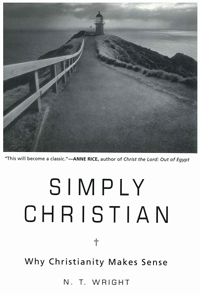 Many of the works I have chosen to review have been deeper theological writings, some of which have been by revered biblical scholar, N.T. Wright. His work as both a historian and theologian has colored his books with a particularly powerful edge. Because of his scholarly bent, when thinking about a general book outlining Christianity and its claims to those outside of the faith (or new to it), I wouldn't have thought to consider a book by Wright. However, "Simply Christian" is just that. It is a book that presents the Christian faith in a clear and understandable format to any who might be interested.
Within its pages, Wright poses a thoughtful progression that examines the human experience to point to an unspoken awareness in ourselves, and our world, of something missing. Wright's "echoes of a voice" elements are justice, spirituality, relationship and beauty– all things which tell us that the universe (and our place in it) are meant for something different than we have come to. But more than a sense of lack, they point to something that exists that we can't name. And in his development of what that is, he names it. The Jewish God, YHWH.
Wright's use of these arguments and specific components (especially justice and beauty) echo clearly the arguments of CS Lewis' writings in both Mere Christianity (which uses moral code/justice) and his sermon/writing The Weight of Glory (which uses beauty and love). I mention Lewis and Wright in the same context, because their parallel books seem to be aimed at the same thing, and both writers are up to the task. Simply Christian, however, is a much more historical and technical exploration of how the world and context of Jewish monotheism brought about the person of Jesus, and how Jesus turned out to be not only the answer for Jewish religious hopes, but also the ultimate "Lord" of the entire human race.
Wright's basic premise is this– God created a good world, but man rebelled from him. God has set out on a plan to rescue his rebelled creation and that plan has come to embodiment in God himself coming to earth in the person of Jesus. Jesus announced this rescue plan of re-creation (putting the creation to rights) and now invites all people into that rescue– not only for their own sakes, but to join in as part of the solution. That solution is called the kingdom of God. The kingdom of God is the realm/dimension of God's love and reign invading and reclaiming man and the earth for God's purposes. Through the power of the Holy Spirit, God continues to work through all those who join in (Christians) and through the church– the gathered Body of Christ.
As best as I can, that is how I would summarize Wright's preposition in Simply Christian. The problem with doing such a summary, however, is that I risk infraction of any number of logical, practical or theological arguments because, simply put, just as life is not simple, Christianity isn't either. And boiling Christian faith down to a few short lines of innocuous (and fairly un-actionable) statement is precisely what Wright avoids by taking on all the salient points in life-breathing detail. I want to make that point because this book is not "Simple Christianity", as if everything intelligent about it could be reduced to a set of polarized truisms. In fact, the author puts to use his own varied, and sometimes extended, metaphors throughout the book to help us grasp the nuance of key concepts and moving narrative of the story of God, creation, man, Jesus, and eventually, the church.
Simply Christian is a very well written book, but it also has significant historical and rhetorical ammunition in its muzzle. The author banters through classical references (Plato, Epicurus, Lucretius), extensive Jewish back-story (all the relevant biblical narrative, as well as apocryphal and historic characters such as Judas Maccabaeus, Simeon ben Kosiba), 1st century Roman world (Caesar, the rise of Rome as a world empire), and plenty of 18th to 21st century (Nietzsche, Hitler, Oscar Wilde, 9/11 attacks) references as well. He does all of this as a way of providing proper context and flow to the presentation being made. It is all excellent, but it is not going to feel "simple" to say a 7th grade student. Wright continues to be in good company, however, as Lewis' regular references to literary or classical world touch-points would likewise be foreign to many readers.
That said, Simply Christian is an excellent book with mountains of good points and very few detractions. The delightful surprises I found are the excellent highlighting he does in correcting the dozens of common misconceptions that people (Christians and non-Christians alike) have of what being Christian really means. His theological stature here helps immensely, as he grasps at "truisms" and debunks them cleanly. Playing with language and logic, he clarifies many incorrect and unhelpful misunderstandings of who Jesus is, what he said and (not the least important) what happens after we die.
Because the truth and explanation of Christianity is not ultimately "simple" (in terms of boiling it down to one-liners that can be defended), this book is not either. However, in the scope sense, it is a well-written exposition and recommendation on what it means to be Simply Christian.
Amazon Link: http://amzn.to/12WHEkd
Review by Kim Gentes
christianity, history, jesus, kingdom of god, n.t. wright, nt wright, questions about christianity, simply christian, theology, wright in Apologetics, Art, Bible, Book Review, Church, Community, Counsel, Creation, Devotion, Easter, History, Jesus, Justice, Liturgy, Ministry, Mission, Old Testament, Prayer, Resource, Resurrection, Theology, Worship Paul: In Fresh Perspective - N.T. Wright (2005)
Sunday, April 28, 2013 at 3:53PM  NT Wright has two kinds of primary writing that I am aware of- the scholarly tomes debating and explaining nuances of his theological positions to other academics (such as Jesus and the Victory of God) and the short but complete books meant for summary and concision of a topic for use by pastors and lay people (such as Simply Christian). When I first got my paperback of "Paul: In Fresh Perspective" I assumed it would be a book in the second style- pastoral, easily read and without the dense pressure of theological details. I was right, and wrong.
In this book, Wright definitely is aiming to speak concisely and clearly about a deeply complex set of issues. And in that, the author succeeds marvelously. The book is easy to follow, well structured and moves clearly from point to point, in a building progression. But the book does not "boil down" the points of Pauline theology into a few clichéd notes. Instead Wright grasps with the breadth of not just our perspectives, but with Paul's. In doing so he turns the understanding of Paul's theology away from our context and into Paul's 1st century, monotheistic, Jewish worldview intersecting with the Greek philosophical underpinnings which were itself pounding its ideologies onto the imperial Roman world.
Wright compresses Paul's world into seventeen deft pages of introduction that orients the reader for the journey to discovering- what was Paul really saying about Jesus, the Spirit, Israel, salvation and God. It would be hard to stack together a work that collapses so many controversial theological pivot points as Wright has done here. But he has done it, and done it without sounding defensive, contradictory or condescending. More than that- he has done it convincingly.
The meat of the book is divided into two main parts. The first part deals primarily with the themes that Wright sees in both Paul and the first century Jewish world- creation & covenant, Messiah and apocalyptic, and gospel and empire. Wright lays these themes out for us to grasp the narrative into which Jesus came and from which Paul is now speaking.
The second part of the book deals with resultant conclusions that the work of Jesus now makes within the context of the themes discussed in the previous section. Wright paints the "fresh perspective" across the primary topics of God (monotheism), God's people (election), and God's future (eschatology). The author wraps up this section by looking pointedly at Paul's personal and specific work, and some specific theological hot-points that Wright moves to clarify via more redefinitions of context.
In both of these sections Wright is taking on the task of, as he puts it, thinking Paul's thoughts after him. This is important to realize as a major mechanism employed by the author because the primary assumption he starts with on all of Paul's work (on every subject Paul presents) is that the apostle himself is actually redefining all of the major components of the Jewish theology and narrative around their fulfillment in and through the work of Jesus, his life, vocation, death on the cross and resurrection. The entire force of Wright's arguments are based on his belief that Paul was taking his Jewish monotheistic narrative, redefining it in Jesus as the Christ, and representing it to both Jews and Gentiles alike who found themselves within the context of the Hellenistic world of Roman imperialism.
For example, a snapshot of this is his statement that God was becoming king in the person of Jesus, and the impact of this on the new people of God (the church) meant that Jesus was now king and not Caesar. The shock waves of these kinds of statements are expounded in the Pauline context and purposefully extirpated from our own. The intersection of culture, politics, and religion that we would segment in the 21st century is brought to light as an inappropriate revisionist viewpoint founded in our modern enlightenment worldview. Wright is careful to return to such nuances when necessary, hoping to remind the reader that Paul (and his 1st century world) would not have seen these things the way we do, and thus we must read Paul with his lenses on, not ours. My review would be in danger of becoming more lengthy than the source being reviewed if I tried to quote and support in any level of detail, but perhaps this will whet your appetite to dig into this breathtaking work by this brilliant scholar.
After having read a few other of Wright's books, I was surprised at how short, yet dense this book was. At about 175 pages, this book holds a profound amount of content. In fact, I am now on my fifth reading of the book in the last 12 days, simply because it took me that many repetitions to draw out some of the details, only after I could hold together the main points after a couple of readings. Each page, each paragraph is thick with explanation and exploration. Yet, it is not written as a cryptic scholarly "thesis" with a standard 30% footnote margin at the bottom. This book is very readable, and the words do not require a dictionary to read. But Wright has written this book so well, so densely that it does require digestion time- or like me, re-reading multiple times.
Of interest to the "Pauline" debaters and scholars is Wright's approach to the doctrine of "justification". I would only say this- if you haven't actually read this book, please don't try to attack its premise on this topic. I understand the desire for many to do so, since the point of justification by faith is so seminal to reformed theology and does (by some accounts) go back as far as Augustine. Wright's keen mind, his work as a historian and his equal desire to translate the 1st century message for our 21st century minds in a way that would allow us to understand his theories make all of this possible and accessible even if juxtaposed to what we've been polarized to believe.
An excellent book, incredibly well-written, with powerful (and fresh) perspectives on key Christian thinking.
Amazon Link: http://amzn.to/17pAy9R
Review by Kim Gentes