Ruta Sepetys,
baltic states,
genocide,
lithuania,
soviet deportation,
stalin in
Fiction,
Geopolitical,
Grief,
History In the past, I would post only book reviews pertinent to worship, music in the local church, or general Christian leadership and discipleship. Recently, I've been studying many more general topics as well, such as history, economics and scientific thought, some of which end up as reviews here as well.
Tuesday, November 20, 2018 at 7:07PM
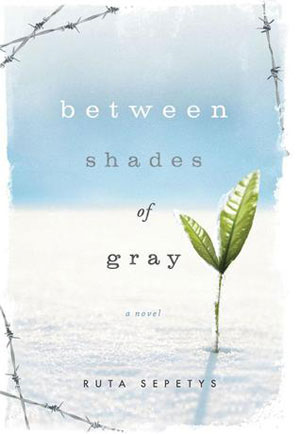
Between Shades of Gray - Ruta Sepetys"It is estimated that Josef Stalin killed more than twenty million people during his reign of terror. The Baltic states of Lithuania, Latvia, and Estonia lost more than a third of their population during the Soviet annihilation."
-from the author notes/postlogue, Between Shades of Gray
I recently finished listening and reading the book "Between Shades of Gray" by Ruta Sepetys, from which the quote above comes. The book is excellent, riveting and embodies the best of what we call "historical fiction." There is something stunning not just about the terrible raw facts of the Soviet genocide in Lithuania, but about the profound way in which Sepetys weaves this tragic tale. The result is real characters in dramatic distress living on the thinnest margins of hope, connection and humanity.
The book is relatively short, and if you have a commute like me, you can use Amazon's whisper-sync to combo read/listen via Kindle/Audible the entire book in a week or less (took me just under 4 days). Sepetys takes the book seriously, and while it is extremely detailed and well researched, it comes across as very personal. This is confirmed by the added interview with the author on the audible version, where she is overcome with emotion towards the end. Ruta Sepetys and many, many thousands are a generation of people whose parents/grandparents suffered through or perished in the cruelest of conditions by the cruelest of leaders. Lithuanians, Estonians, and Latvians, like the Jews, were systematically collected, condemned and crushed. This book is a testimony to that, if at least in its context.
But hidden within these dark moments, Sepetys captures the essence of what real life author Viktor Frankl spoke of in his iconic book of the Jewish holocaust "Man's Search for Meaning", when he said:
"Everything can be taken from a man but one thing: the last of the human freedoms—to choose one's attitude in any given set of circumstances, to choose one's own way."
"Between Shades of Gray" succeeds at being a solid book not just because it is well thought and well researched, but because it tells a story and does it well. Great writing on a level deserving of the most prestigious commendations, and especially the highest award possible- your time. Buy this book. Read or listen to it. You won't regret it.
Amazon book link: https://amzn.to/2PGrn4N
Review by Kim Gentes
Ruta Sepetys,
baltic states,
genocide,
lithuania,
soviet deportation,
stalin in
Fiction,
Geopolitical,
Grief,
History
Monday, January 14, 2013 at 12:13AM
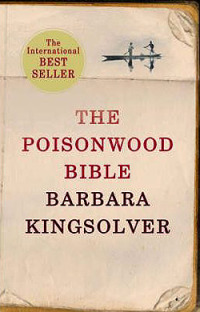
Reading a novel set in a real world circumstance, one can forget that the story is nonetheless fictitious. And this might just be what Barbara Kingsolver intended on happening in her novel "The Poisonwood Bible". The story is a wonderful and complex character study set in the exotic land of Congo in the late 1950's and extending until the 80's (where the book storyline ends). The book explores injustice at various levels but most poignantly as it occurs from the emulated figure of Nathan Price- who represents the kind of personal, painful, domestic and religious antagonist that we both hate and pity. Kingsolver is intent on demonising the Baptist missionary as preacher, husband, father and human being with a subordinate purpose of political preaching on the part of the author. Don't get me wrong, I found the book to be very well written and very accurate of some Christian leaders across history. The arrogance and insensitivity portrayed through Nathan Price typifies what most Christians (let alone people) despise about religion- that within it's ranks are voices more harmful than healing.
But the author fails to place a voice of reason within the scope of the story that can represent the missionary vocation as anything good. The other missionaries explored in the story are either white snobs who profit and exploit the country and its riches or protestants who convert to Catholicism in the course of their mission. Kingsolver does not give us a realistic contrast to Nathan's evil and we are left with a darkness that reveals truth but grows to expose the author's own prejudices. We can believe a man can be as arrogant and unkind as Nathan Price, and that his family can survive (at least partially) from his influence- but we are left feeling like the story was artificially built against the man rather than just naturally revealed as part of the narrative.
That said, "The Poisonwood Bible" is excellent writing with vivid characters, undulating dialog that feels absolutely real, exotic settings to be explored and real life, joy and pain to be experienced. Kingsolver is brilliant as a novelist, making situations feel like real motion. And when things are interrupted, by pain, joy or surprise, the reader is given space to feel the experience through her vivid prose. One chapter especially had me nearly in tears- as a young child dies and a painful, haunting day as lived by the family members is recounted.
This novel is a story, but it is a good story and it does teach us something of moral value. The lesson are not contrived, even if the platform is occasionally stolen for political stumping about American imperialism and European colonialism. The life and gift of this work is its characters, its setting and its revelation about human character in its strain to indoctrinate others into a system of belief. The author uses multiple points of view to tell the story- a mother and her four children are the voices of this prose. The father (our antagonist) is never given his own voice. As a man, I think this was a wise choice of the author- since it allows the reader to interpret the mind of Nathan Price simply by his speech and actions. And it is this kind of judgment that his family members must make about him as well- and they do.
This is a very good novel by an exceptional writer- if you like character built stories, this is a good choice.
Amazon Link: http://amzn.to/VZkGo7
Review by Kim Gentes
baptist,
barbara,
bible,
book,
congo,
kingsolver,
missionary,
mobutu,
nathan price,
novel,
poisonwood,
review in
Bible,
Book Review,
Church,
Community,
Fiction,
Geopolitical,
Grief,
Justice,
Linguistics,
Mission